
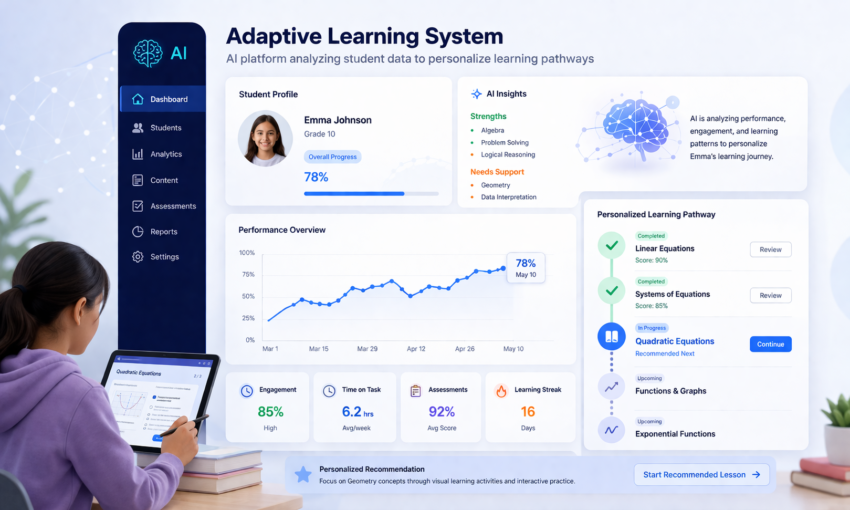
Artificial intelligence has been implemented into the learning systems making education a fast evolving field. Conventional practices cannot always satisfy specific needs of individual learners, but AI co-learning systems are changing this area and developing adaptive and personalized learning environments. These systems are smart companions, which learn continuously through the interactions with the user and enhance the experience. This change is reducing education to be more exciting, more effective and more reachable to the learners in the entire world.
What Are Co-Learning Systems with AI?
Definition and Main Idea.
AI co-learning systems are improved platforms, in which humans and artificial intelligence play a part in the learning process. These systems are dynamic unlike the traditional e-learning systems, in terms of how they behave with the learner, as well as his/her preferences and performance. The AI is constantly being developed with the learner, making it more responsive and efficient to provide education, which is getting better with time.
Key Characteristics
These systems are created to handle a great volume of learner data and be able to respond in real-time. They customize content, change the levels of difficulty and present the strengths and weaknesses. This makes learning more focused and effective on the learners and they will be able to perform better with minimal effort.
The most important attributes of AI Co-Learning Systems.
- On-the-fly personalization in terms of learner behavior and progress.
- Ongoing feedback between AI systems and learners.
- Intelligent analytics to determine areas of strength, weakness and gaps.
- Incorporation of multimedia such as video, quizzes, and simulations.
- Learning can be flexible and worldwide by being scaled across devices.
The Development of Personalized Learning.
Standardized to Individual Learning.
The previous systems of education were based on administering the same content to all the individuals irrespective of their differences. This usually created a gap in comprehension and not following. This method is modified in AI co-learning systems, in which content is personalized to individual learners. They enable people to learn at their own pace, which makes them understand and learn more, and minimises the pressure of learning.
Data and Analytics role.
The basis of these systems is data. AI monitors user data, learning rate, errors and interactions. It also forecasts the needs of learners and makes real-time changes in the content using this information. This data-driven model is helpful in that the learners will always be provided with pertinent and efficient learning content.
Key Advantages of Adaptive Learning Ecosystems.
- Enhanced retention with tailored learning experiences.
- More motivation with interactive and interesting content.
- Individualized learning that is flexible and at any time.
- Ongoing career and skills development.
- Greater access to good education irrespective of geographical regions.
The functioning of Adaptive Learning Ecosystems.
Real-Time Feedback Mechanisms
AI systems can give instant feedback on the actions of learners and make them realize their errors and learn promptly. This real-time feedback system will keep the learners active and enhance quicker development.
Intelligent Content Delivery
Performance-based dynamically adjusted content. Simple explanations are provided to beginners whereas advanced learners are given more complex explanations. This will keep all learners active without getting overwhelmed and bored.
Multimodal Learning Integration
AI co-learning systems bring together different formats of learning which include videos, simulations, interactive exercises and gamified modules. The strategy encourages other learning orientations and improves the comprehension process of information because the information is presented in various forms.
Issues and Moral considerations.
Data Privacy Concerns
These systems are highly dependent on the data of the users and, therefore, it is important to safeguard the data. The organizations need to maintain trust by ensuring safe storage, open policies and ethical utilization of information.
Algorithmic Bias
Artificial intelligence may be biased based on the biases included in the training data, and such results are unfair. The bias should be reduced by continuous monitoring and using a variety of datasets to achieve fairness.
Dependence on Technology
Although AI is an improvement to learning, overdependence on it can impair independent thinking. There should be a balance between the use of AI and human assistance.
Infrastructure Limitations
The internet and digital devices are commonly unavailable in most areas, which may impede the usage of AI-based learning systems. These gaps need to be addressed to achieve inclusive education.
The Future of AI Co-Learning Ecosystems
Adaptation to new technologies.
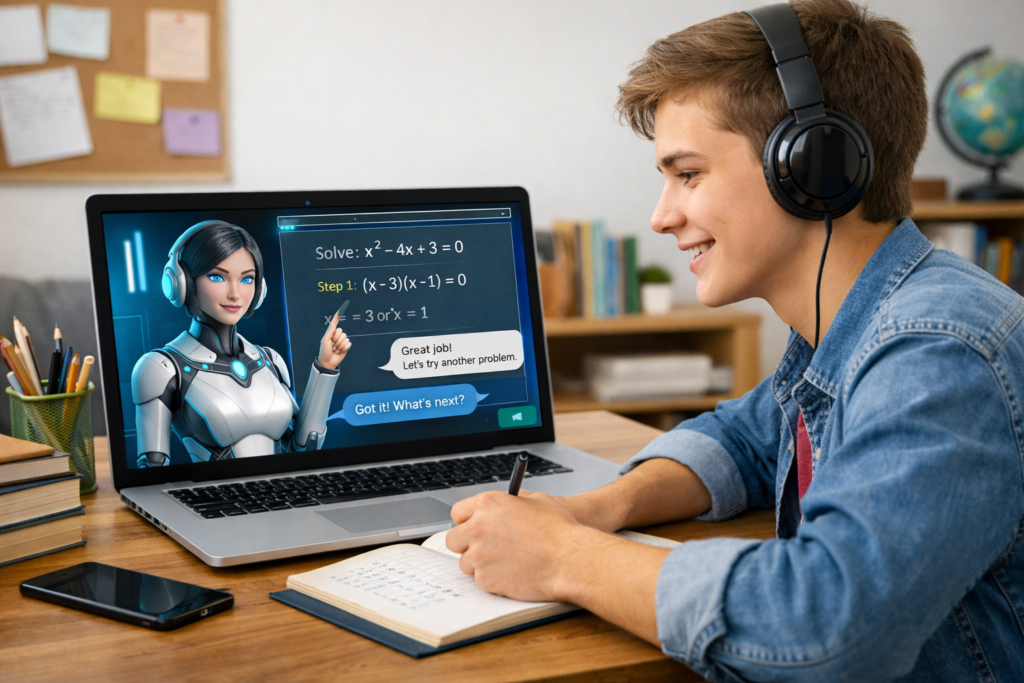
The learning systems of AI in the future will be liaised with technologies such as virtual reality and augmented reality. This will result in immersive environments that the learners will be able to engage with the content in a more realistic and interesting manner.
Human-AI Collaboration
AI will not substitute teachers but augment the roles of teachers. Teachers will be working on mentoring and creativity, and AI will work on repetitive activities, including tests and suggestions.
Continuous Evolution
With the development of AI technology, systems will be more intelligent and intuitive. They can even learn about the emotions and cognitive state of learners, which allows them to be even more personalized and provide an effective learning experience.
Conclusion
The AI co-learning systems are transforming education to be more personalized, adaptive, and accessible. The systems fill the gap between the needs of each individual learner and scalable education. Despite such difficulties as access and privacy of data, the benefits are much more significant. With technology ever-changing, AI co-learning ecosystems will become influential to the future of education, empowering learners across the globe.
Questions Frequently Asked (FAQs).
1. What is an AI co-learning system?
The AI co-learning systems are platforms of interaction of learners and AI that occur throughout the learning process and results to improve the learning process and results.
2. What is the personalization of learning by AI?
AI examines the data about user behavior and performance to modify the content, pace and difficulty level.
3. Who will be able to enjoy AI co-learning systems?
Personalized and adaptive learning can be beneficial to students, professionals, and even lifelong learners.
4. What are the principal dangers of AI in education?
Some of the risks are privacy of data, bias in the algorithms, and over-reliance on technology.
5. What does AI hold as far as education is concerned?
AI will keep on developing, providing more personalized, engaging and effective learning experiences and assisting teachers.