
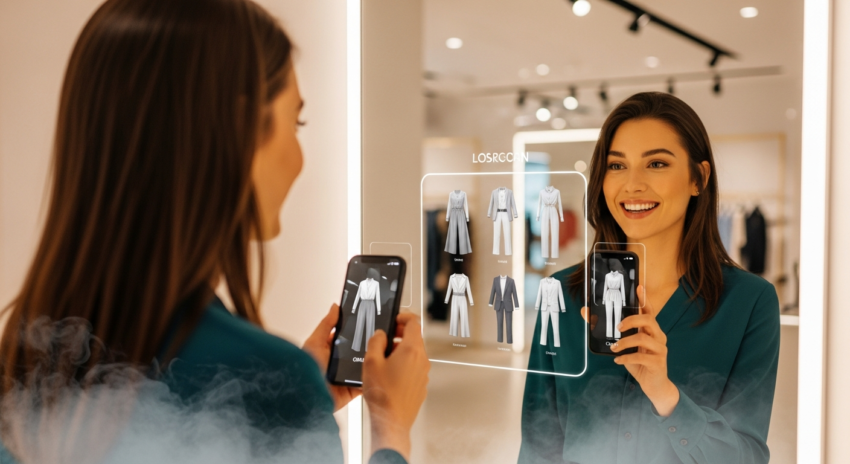
The online shopping industry has experienced an unprecedented change in the past few years and this is attributed to the development of artificial intelligence. People do not wish to continue scrolling through thousands of products and wish to be provided with personalized, efficient, and engaging shopping experiences. This is where AI personal stylists are employed. These smart systems will learn to know the preferences of the user, analyze their behavior, and provide them with fashion suggestions in real-time. The integration of data science and fashion intelligence is transforming your average online retailing platform into a smart, user-friendly shopping assistant; one that is nearly human.
What Are Artificial Intelligent Personal Stylists?
AI personal stylists are the progressive online appliances that operate based on machine learning algorithms and data analytics. They are the virtual fashion advisors which suggest the clothes, accessories and outfits, according to the personal style and preferences of a user. Such systems gather and examine information like browsing history, the way they make purchases, their body type, their favorite colors and even the trends of seasons.
The AI stylists learn and develop continuously in contrast to the traditional recommendation engines. The more the user deals with the platform, the more precise and sophisticated the recommendations will get. This provides an extremely individual experience of a shopping process in which the customers feel listened to and appreciated like they have a personal stylist to guide them.
The personalized shopping Powered by AI Algorithms.
User Profiling and Collection of Data.
The first step of AI systems is gathering data based on the various touchpoints, such as user profiles, past purchases, wishlists, and traversal. Such information is utilized to create a comprehensive profile of each of the shoppers. As an example, when a customer purchases minimalistic items more often than other types, the AI will give such outfits a priority in the subsequent recommendations.
Predictive Insights and Machine Learning.
Machine learning allows AI stylists to anticipate the likes of the users before they even type on the search engine. Focusing on the trends of millions of users, the system determines them and prescribes the products that suit the taste of a person and the fashion tendencies all over the world. This is an intuitive and predictive feature of shopping.
Visual Search and Image Recognition.
Visual recognition functionality is frequently added by AI stylists today. The users will be able to put pictures of clothes that they like, and AI will find the same clothes online. This technology overlays the inspiration and purchase, so it is more convenient to imitate desired looks.
Important AI Personal Stylists Advantages.
- Hyper-Personalized Recommendations – Recommendations according to personal preferences and behavior.
- Time Saving – It saves the time spent in searching through huge catalogs.
- Much improved Purchase decisions – eliminates confusion by displaying the pertinent choices.
- Increased Customer Satisfaction – Shoppers are even more attached to the shopping experience.
- Higher Sales of Brands – Customized recommendations enhance the conversion rates.
- Trend Awareness – AI is responsive to fashion trends.
- Economic Implication to Ecommerce and Fashion Industry.
AI personal stylists are changing the face of ecommerce by innovating digital shopping by making it interactive and smart. Conventionally, the shoppers used shop assistants to help them with styling. Nowadays, AI does the same and even better on the Internet by providing recommendations based on the data in real time.
In the case of businesses, AI offers important information about the behavior of customers. Brands are able to optimize stocks, minimize returns of products, and develop specific marketing plans. As an example, when AI notices an increase in sustainable fashion, the brands can modify their services. Such accuracy can assist firms to remain competitive in a dynamic market.
The consumers, on the other hand, have a smooth and an enjoyable shopping experience. They are not overwhelmed with options but with a selection of choices, being curated to their style, size and budget. This does not only enhance satisfaction but it also creates long term loyalty.
Challenges and Limitations
Data Privacy and Security
AI systems are highly dependent on personal data, and this issue is connected to the question of privacy. Users might not be comfortable when providing information on their tastes and habits. Firms need to have good data protection practices and policies.
Algorithm Bias
In case the information applied to train AI systems is insufficient or biased, the recommendations can be non-diverse. This may lead to repetitive recommendations which may not capture a changing style of a user.
Limited Human Creativity
Although AI is extremely effective, it can be very detached, and a lack of information about the human touch and intuition of the stylists can occur. Fashion can be associated with expression, and AI is still capable of development in that regard.
Future of AI Personal Stylists.
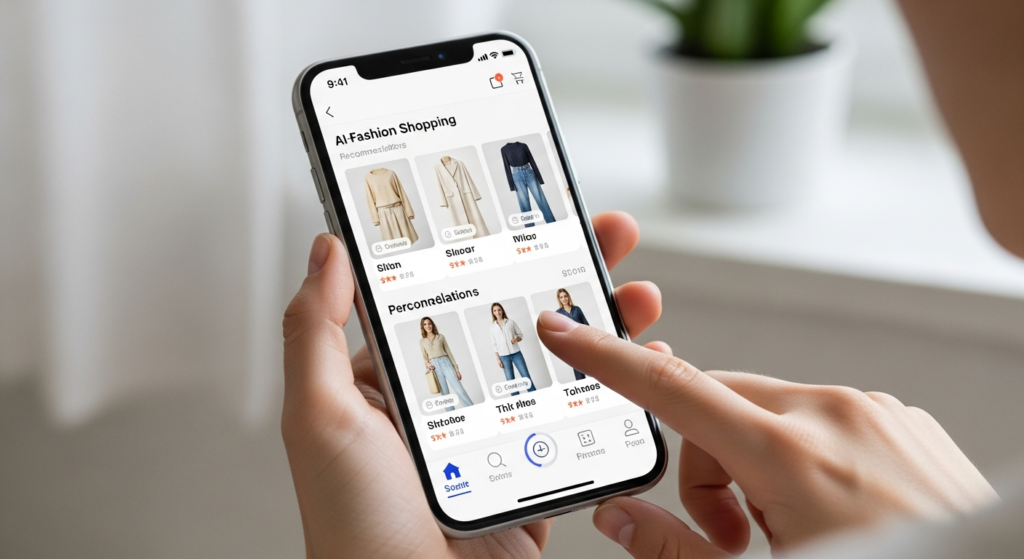
The future of AI personal stylists is very bright. These systems will be more interactive, intuitive and advanced as technology keeps on changing. The ability to integrate with augmented reality (AR) will enable the user to virtually try on outfits, which will make the shopping process more immersive.
The AI assistants that provide voice support and chat-based styling devices will be more natural and conversational. Also, AI will be instrumental in ensuring sustainable fashion suggestions of environmentally friendly items and assist users in making mindful shopping choices.
Better personalization can also be anticipated, where AI knows what users like, as well as why and why they like it. This emotional level of perception will put AI even more near to aping human stylists.
Conclusion
The combination of technology, data, and fashion knowledge of AI personal stylists is transforming online shopping to make it a seamless experience. They make the decision making process simpler, time-saving, and highly personalized recommendation which leads to increased customer satisfaction. Even though some issues like privacy concerns and algorithm prejudice remain, continuous progress is made to deal with these problems.
FAQs
1. What do we mean by AI personal stylist?
An AI personal stylist refers to an online platform employing artificial intelligence to suggest clothing and fashion products depending on customer preferences and activities.
2. What is the effect of AI on shopping?
AI uses user data like the history of browsing the Internet, past order records, and preferences to make personalized product suggestions.
3. Are AI stylists reliable?
Yes, they will be more precise with time as they get to know more about the users and become better in this respect.
4. Are AI personal stylists safe to use?
Secure systems are used on most of these platforms to safeguard data though users are advised to look into privacy policies first before sharing their personal information.
5. Is it possible to fully substitute human stylists with AI?
AI will be able to help and improve the work of stylists, but it might not completely displace the imagination and human touch of human stylists.